
Speaker Schedule (2025)
| Date | Speaker | Talk Information | Recommended Reading |
|---|---|---|---|
| 4/3 | Eddie Zhang, OpenAI  | On Alignment through Reasoning in Language Models Edwin Zhang is a researcher specializing in AI safety, reinforcement learning, and language modeling, currently at OpenAI. He was previously pursuing a PhD in Computer Science at Harvard University. His research focuses on applying AI to real-world challenges for social good, in domains such as safety, economics, and policy-making. | Deliberative alignment: reasoning enables safer language models A Survey on Hallucination in Large Language Models: Principles, Taxonomy, Challenges, and Open Questions Extrinsic Hallucinations in LLMS LLM Hallucination Survery (Github) |
| 4/10 | Jerry Lopez, Torc Robotics | Ensuring AI Safety in Level 4 Autonomous Vehicles – Technologies, Tools and Methods This presentation will give an overview of the technologies, tools and methodologies which have been developed and matured over the last 15 years to address the challenges associated with safety deploying AI in Level 4 autonomous vehicles. The talk will also highlight some of the key challenges in AI safety for autonomous systems and discuss some of the latest state-of-the-art technologies under development in the research community. Jerry Lopez has over 20 years’ experience leading R&D teams with the last 10 years dedicated to research on safety of autonomous vehicles, both airborne and on-road. Jerry has also spent the last five years researching topics in AI safety. Jerry currently serves as Senior Director of Safety Assurance at Torc Robotics, where he leads a team of engineers who independently assess the safety of Torc’s autonomous trucking solution for pre-production closed-course and public road driving. Prior to joining Torc Jerry spent 2 years as the Senior Director of Safe Autonomy at Motional, a Level 4 Robotaxi company and also spent 15 years at GE Global Research focusing on safe AI for autonomous aircraft. Jerry holds B.S., M.S. and Ph.D. degrees, all in Electrical Engineering. Jerry resides in Pittsburgh PA with his wife. | |
| 4/17 | Eugenia Kim, Microsoft Research  | Inside the AI Red Team: Our Multidisciplinary Approach Eugenia Kim is a software engineer on Microsoft’s AI Red Team, where she focuses on developing tools for red teaming generative AI systems. Combining her engineering expertise with research into ethical AI, Eugenia is dedicated to creating safer and more responsible AI products. Her prior research in bias mitigation and AI sustainability has shaped her multidisciplinary approach to advancing AI safety. | |
| 4/24 | Masha Itkina, Toyota Research Institute  | Evaluation and Uncertainty in the Age of Robot Learning Large-scale robot learning, colloquially known as Large Behavior Models (LBMs), Embodied Foundation Models (EFMs), or Vision-Language-Action (VLA) models, has become increasingly the norm in robot learning literature since the success of ChatGPT. Nevertheless, there are many questions that remain surrounding their development in the context of real-world, embodied systems. For example, we need rigorous statistical methodologies for evaluation and comparison of existing robot learning models. To deploy these models in human environments, they should be equipped with reliable failure detection systems despite the challenge of immeasurable failure types and conditions during deployment. Lastly, these models should have the capacity to explore and adapt to new environments, preferences, and tasks. In this talk, I will overview our work as part of the Trustworthy Learning under Uncertainty (TLU) effort at TRI along a few of these research directions, focussing on evaluation and failure detection. Masha Itkina is a Research Lead and Manager in the Large Behavior Model (LBM) division at the Toyota Research Institute (TRI). At TRI, she co-leads the Trustworthy Learning under Uncertainty (TLU) effort in the context of robotic manipulation. Her research focuses on policy evaluation, failure detection and mitigation, and active learning. Previously, she completed her PhD at the Stanford Intelligent Systems Lab (SISL) on uncertainty-aware perception for self-driving cars. Her work has been published in top-tier robotics and machine learning conferences, including RSS, CoRL, ICRA, IROS, and NeurIPS. | |
| 5/1 | Shannon Novak, Safe Space Alliance  | When Friends Turn Fatal: Conversational AI’s Safety Meltdown Note: This talk will discuss sensitive topics like depression, self-harm, and suicide There are increasing reports of conversational AI agents causing, or having the potential to cause significant harm to people through failure or malfunction including death. As the director of a nonprofit organisation dedicated to the safety of queer people around the world I receive reports almost daily of conversational AI agents gone bad including agents that: threaten to out queer people, encourage suicide, provide misinformation about queer communities, have extreme biases against queer people, and misuse data. In this talk I’ll expand beyond (but still include) queer communities to all communities and discuss the alarming lack of safety in 14 conversational AI agents (including ChatGPT, Grok, Replika, and children’s AI companions). I’ll introduce the “Maida Test”, a new framework for stress testing conversational agents, a proposed conversational AI agent safety benchmark system, and a newly developed “Conversational AI Agent Safety Rating (CAASR)” system. I’ll talk about the CAASR rating (from A+ to F) calculated for each agent (the average across all agents being an “F”), and why an immediate and collaborative response is needed between developers, policy makers, researchers, and users to address the safety threats identified. Shannon is the director of the Safe Space Alliance, a queer-led nonprofit organization that helps people identify, navigate, and create safe spaces for queer communities worldwide. He spent 20 years in the education and technology sectors across industries before moving into his current role. His current research focuses on reducing rates of anxiety, suicide, and depression for queer communities, and emerging technologies and their relationships with queer communities. | |
| 5/8 | Somil Bansal, Stanford 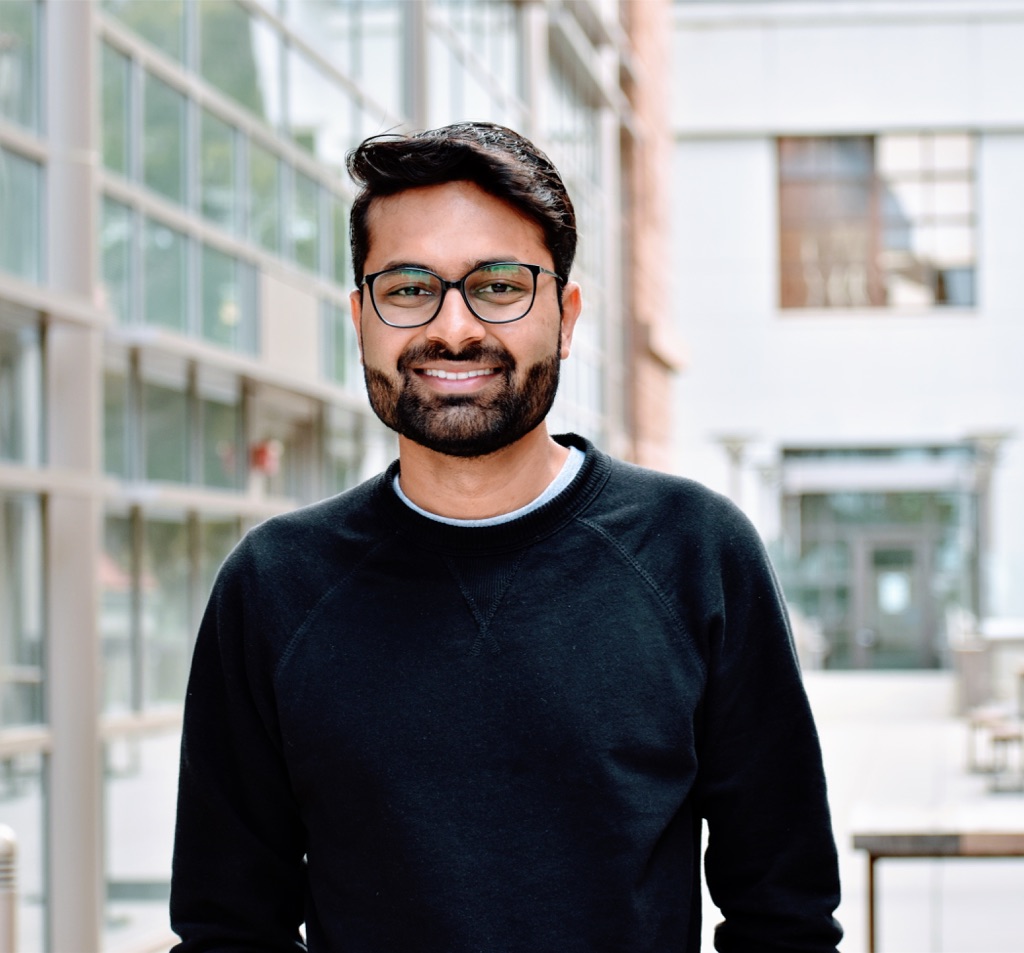 | Safe AI-Enabled Autonomy No other technology has probably impacted autonomous systems in the last decade as much as machine learning and AI. However, integrating data-driven models into the control loop introduces a critical challenge: how can we ensure the safety of learning-enabled autonomous systems? I propose a new framework that leverages reachability-based techniques from control theory to embed safety guarantees throughout the entire lifecycle of learning in autonomous systems. I’ll focus on three key questions: (1) How can we incorporate safety requirements in the training process to learn safety-aware policies? (2) How can we adapt these safety policies on the fly based on raw sensory information and language-based feedback? (3) How can we stress-test learning and vision-based policies to expose their safety-critical failures? Throughout the talk, we will demonstrate the potential of these methods in developing safe AI-based autonomous systems, including autonomous aircrafts, legged robots, and drones. Somil is an assistant professor in the Department of Aeronautics and Astronautics at Stanford, where he leads the Safe and Intelligent Autonomy Lab. His research focuses on understanding how machine learning methods can be combined with classical, model-based planning and control methods with the goal of enabling intelligent and safe decision making in complex and uncertain environments, especially when the robot relies on high-dimensional sensory inputs and data for decision making and control. | |
| 5/15 | Dimitra Giannakopoulou, Amazon Web Services 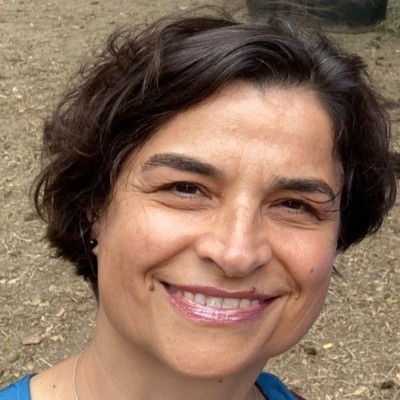 | Keeping Hallucinations in Check with Automated Reasoning In December 2024, AWS launched the Automated Reasoning checks safeguard in Amazon Bedrock Guardrails for Gated Preview (https://aws.amazon.com/about-aws/whats-new/2024/12/amazon-bedrock-guardrails-automated-reasoning-checks-preview/). With this, AWS became the first major cloud provider to integrate automated reasoning in their generative AI offerings. Automated Reasoning checks help detect hallucinations and provide a verifiable proof that a large language model response is accurate. This talk will discuss the friction between automated reasoning (AR) and fast-paced non-deterministic AI technologies, and our journey in embracing AI to make AR widely accessible. We will also present practical challenges as we prepare ARc for General Availability. Dimitra Giannakopoulou is a Senior Principal Applied Scientist with Amazon Web Services (AWS). Her work uses automated reasoning to ensure the correctness and security of distributed systems, and more recently, to detect hallucinations in artificial intelligence. Prior to that, she was a Senior Research Scientist with the NASA Ames Research Center, where she developed scalable verification and validation techniques for safety critical systems. She holds a PhD in Distributed Computing from Imperial College, London. Dr. Giannakopoulou is the technical lead for two NASA open source verification tools, jpf-psycho and FRET. She is the recipient of several awards, including a NASA Group Achievement Award, a NASA exceptional technology achievement medal, and an Automated Software Engineering conference most influential paper award. She has authored over 70 peer-reviewed publications and has delivered several keynote talks at international conferences. | |
| 5/22 | Mantas Mazeika, Center for AI Safety  | Utility Engineering: Analyzing and Controlling Emergent Value Systems in AIs Large language models don’t just get smarter as they scale—they also begin to acquire surprisingly coherent value systems. In this talk, I’ll introduce utility engineering, a new research agenda for analyzing and controlling those emergent values. Using the framework of utility functions, we identify structural patterns in LLM values, such as expected utility maximization, as well as concerning tendencies, including valuing the lives of some humans above others. I will outline our experimental findings and discuss why utilities can be a useful tool for further work on AI alignment. Mantas Mazeika is a Research Scientist at the Center for AI Safety. His recent work focuses on AI alignment, tamper-resistance for open-weight models, and AI safety benchmarks. He received his Ph.D. in Computer Science from the University of Illinois Urbana-Champaign in 2024. | |
| 5/29 | Nicholas Carlini, Anthropic  | LLMs for Security: Where are we now? LLMs are amazingly capable at many tasks. But how good are they at being useful in computer security? In this talk I first discuss one attempt at studying to what extent LLMs are capable of performing challenging research-level security tasks. As it turns out, they’re not very good at this yet. So then I consider a second question: what could LLMs do to change security today? I argue there are many domains where even the capabilities of current models would more than suffice to fundamentally alter the economics of how attacks are performed and monetized. Finally, I conclude with some thoughts looking towards the future. Nicholas is a research scientist at Anthropic working at the intersection of machine learning and computer security. His most recent line of work studies properties of neural networks from an adversarial perspective. He received his Ph.D. from UC Berkeley in 2018, and his B.A. in computer science and mathematics (also from UC Berkeley) in 2013. |
